The Spread of Corruption and Its Impact on Democracy
When corruption becomes deeply embedded in a society, it can erode the very foundations of democracy. This is particularly evident in the case of the Trump family, whose actions are sending a clear message to America’s elite that power can be bought, much like in countries such as Russia under Vladimir Putin or Hungary under Viktor Orbán. This shift is not only distorting the economy but also undermining the principles of fairness and justice that are essential for a functioning democracy.
Personal Experiences with Corruption
During my time working for an international relief agency in the early 1980s, I witnessed firsthand how corruption operates in different parts of the world. In Uganda, during a conflict and famine caused by the invasion of Tanzanian troops, I had to pay a $50 bribe at the Ugandan embassy in Nairobi to obtain a visa. Upon leaving through the damaged Entebbe airport, three soldiers pointed their weapons at me and demanded half of whatever money I had left before allowing me to proceed.
In Haiti, a high-ranking official attempted to solicit a $15,000 bribe from me in exchange for permission to operate our agency. In a remote area of Mexico, a police officer pulled me over and demanded $100 or threatened to detain me overnight. These experiences were quick, unforgettable lessons in how corruption functions: when it becomes the default operating system of a country, it drains resources, makes it difficult for honest businesspeople to thrive, and ultimately destroys democracy itself.
The Corrupt Practices of the Trump Family
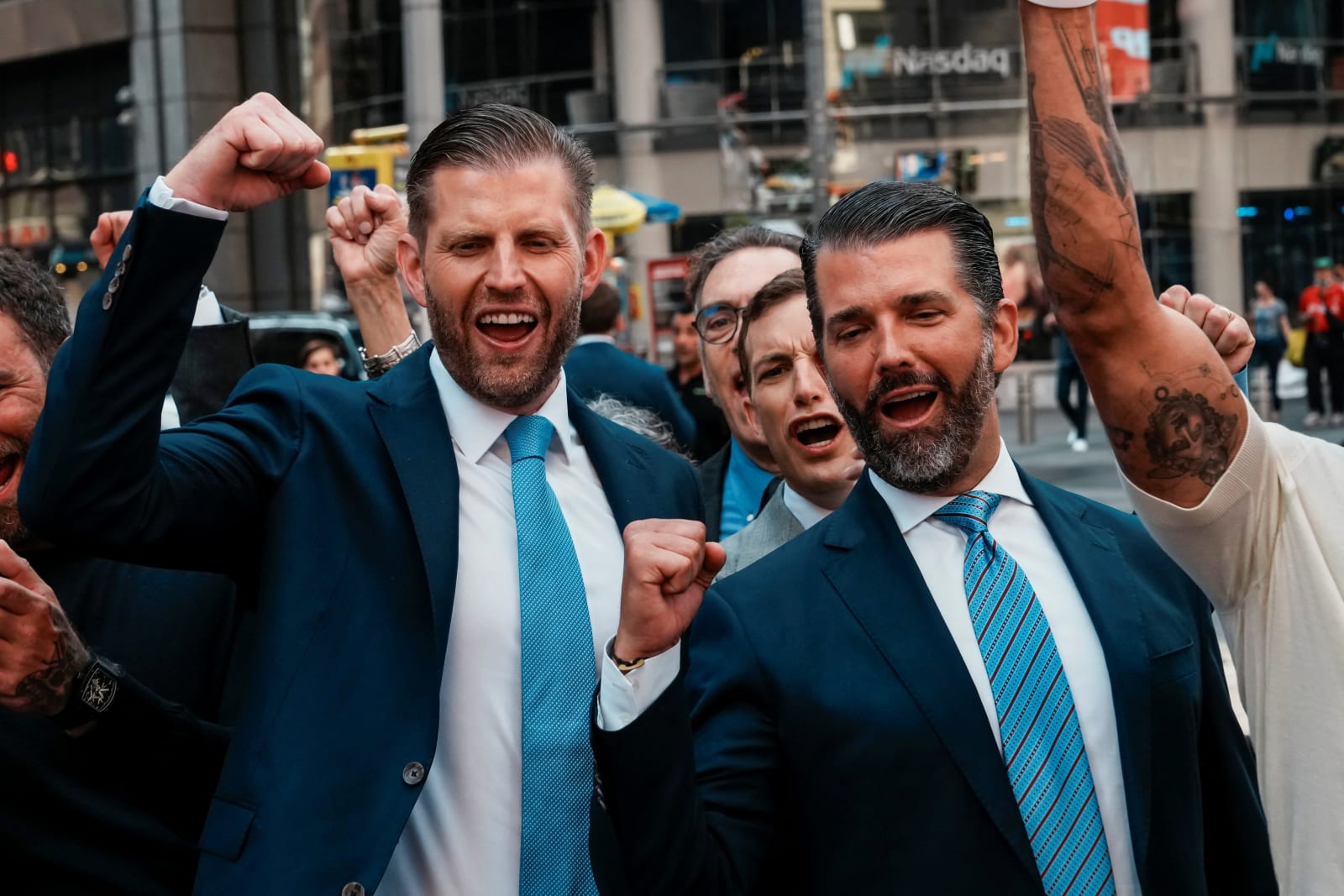
The same corrupt practices that have plagued other nations are now spreading in the United States. The Trump family's actions, including the open solicitation of bribes disguised as "investments," the use of private jets, crypto windfalls, foreign hotel projects, and "licensing fees," have begun to teach America’s wealthy and business leaders that access to government is now a purchasable commodity.
Examples of this include Apple’s Tim Cook offering a chunk of 24-karat gold to Trump in hopes of tariff exceptions, corporations paying for the Epstein Ballroom expecting favorable treatment, and the UAE providing billions to Trump’s children before granting them sensitive information. Additionally, border czar Tom Homan accepting $50,000 in a paper bag from an FBI agent, and headlines about close friends of JD Vance taking over key health research, all highlight the extent of these corrupt practices.
Economic Consequences of Corruption
Once the expectation of corruption takes hold, it reshapes the entire economy. It tells corporations, billionaires, and foreign governments that the fastest way to secure contracts or avoid regulations isn’t through innovation or competition but through flattery, payment, or tribute to Trump, his wife, or his children.
This dynamic is similar to what has occurred in Russia and Hungary. In Russia, researchers estimate that roughly 15 to 20 percent of the nation’s GDP vanishes each year into the pockets of Putin, his oligarchs, and loyal politicians. In Hungary, corruption is smaller in absolute size but just as corrosive, with public contracts routinely overpriced and many companies operating based on loyalty rather than market principles. The result is stagnant productivity, collapsing services, and a hollowed-out middle class.
The Role of the Supreme Court
With five corrupt Republicans on the Supreme Court, the legal framework that once protected against political bribery has been weakened. Cases such as Buckley v. Valeo, First National Bank of Boston v. Bellotti, and Citizens United v. FEC have legalized unlimited political bribery, making it easier for those in power to exploit their positions for personal gain.
Historical Precedents and the Path Forward
History shows that when leaders enrich themselves at the expense of the public, it leads to the erosion of democracy. Regulators are neutered, watchdogs are fired, and the press is silenced through lawsuits and regulation. Strong-arm tactics, such as intimidating lawyers, journalists, and opponents, become common. This pattern has been seen in countries like Russia and Hungary, where critics of corruption have faced severe consequences.
Recovering from systemic corruption requires action. Countries that have successfully fought back have done so by prosecuting corrupt leaders, enforcing transparency, empowering independent prosecutors, protecting whistleblowers, and making government transactions visible to the public. These measures raise the cost of corruption higher than its potential payoff.
The Crossroads We Face
We are at a critical crossroads. We can either follow the path of Russia and Hungary, where a significant portion of national wealth disappears into private hands, or we can defend the idea that government exists to serve the public, not enrich the Trump dynasty. If we fail, America will cease to be a democracy in any meaningful sense, becoming a market where laws, tariffs, and justice are products to be bought and sold by those with the closest access to Trump or his family members.
Corruption is not an abstract concept; it is the moment when fear replaces fairness, power replaces principle, and Americans become "customers" of their own government instead of citizens. If we let Trump and his circle finish this transformation, America will resemble Putin’s Russia, becoming another tinpot dictatorship with a fabulously rich "royal" entourage and a vast class of struggling, working poor who cannot afford to appease the First Family.