A Disturbing Incident Sparks National Outcry
A recent incident at a school in Azov, Rostov region, has sparked widespread concern and criticism across the country. The event, which was first reported by local media and later confirmed by officials, involves the division of lunch tables based on students' socioeconomic status and their connection to Russia’s military operations in Ukraine.
Divided Lunch Tables: A Symbol of Inequality
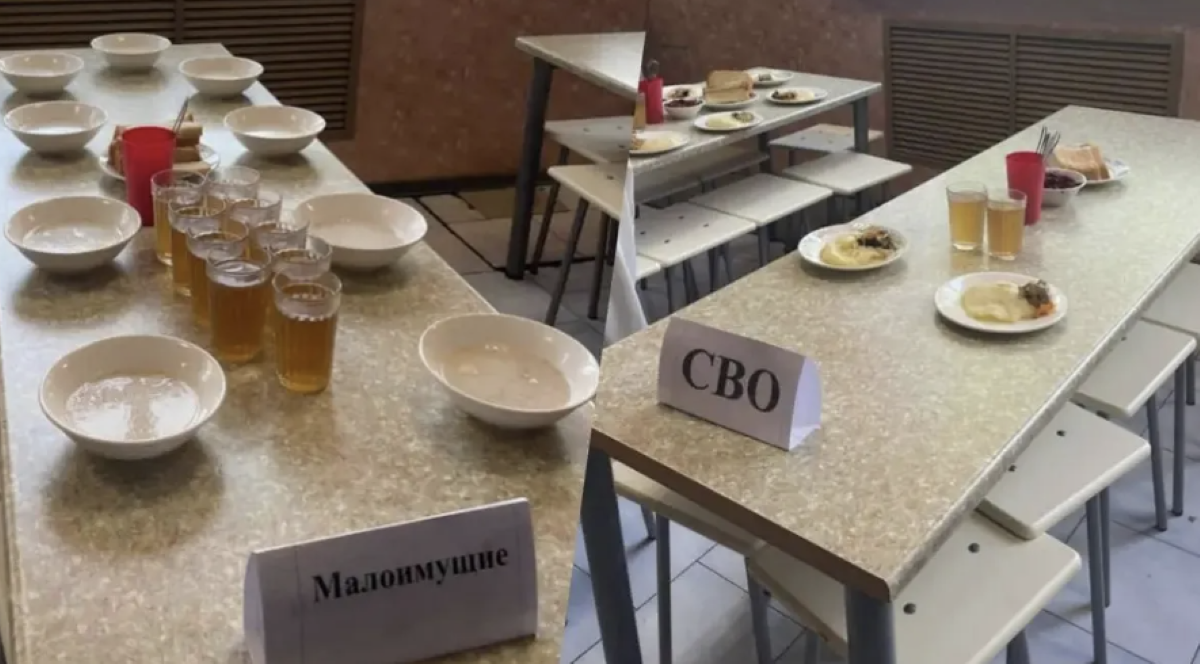
Photos shared on social media reveal signs placed on school tables that read “For those with low incomes” and “For SVO,” referring to Russia’s “special military operation” in Ukraine. These images were taken at School No. 11 in Azov and quickly gained attention online.
Ekaterina Mizulina, head of the League for Safer Internet, was among the first to highlight the issue. She described the practice as “blatant discrimination” and warned that it could lead to bullying and humiliation among students.
“It is not difficult to imagine how uncomfortable the children feel and how many cases of harassment this can create,” Mizulina wrote on her Telegram channel. Her comments resonated with many who saw the photos, leading to a growing outcry against the school’s actions.
Officials Take Action
Rostov region governor Yuri Sliusar confirmed the authenticity of the footage and stated that the school’s principal had been officially reprimanded. He added that authorities were reviewing the school’s contract with its catering provider.
“Such labeling not only humiliates children’s dignity but also provokes harassment in the school environment, which is absolutely unacceptable,” the governor said in a statement.
Local media outlet Govorit NeMoskva reported that a graduate from the school identified the location as Azov’s School No. 11. However, the principal has not made any public comments regarding the incident.
Unequal Meals: A Deeper Issue
Journalists uncovered that the disparities went beyond just the table signs. Children from low-income families were reportedly served a simple breakfast consisting of wheat porridge, bread, and tea. In contrast, the children of soldiers who served in Ukraine, as well as those from large families, received more substantial meals including soup, pilaf, chicken, and meatballs.
This revelation has led to further scrutiny of the educational system in Russia and the treatment of families affected by the war. Social media users in the neighboring Stavropol region have since claimed that similar disparities exist in their schools.
Broader Implications and Public Reaction
The reports have fueled a broader debate over inequality in Russian educational institutions and the government’s treatment of families affected by the war. Many are questioning whether such practices are isolated incidents or part of a larger pattern of discrimination.
Public reaction has been largely negative, with many expressing outrage over the treatment of students based on their background. The incident has raised concerns about the ethical responsibilities of schools and the need for greater oversight to ensure fair treatment of all students.
Ongoing Investigations and Calls for Change
As the situation unfolds, there are calls for stricter regulations to prevent such incidents from happening again. Advocates argue that schools should be safe spaces where all students feel respected and valued, regardless of their socioeconomic status or family background.
The incident at School No. 11 serves as a stark reminder of the challenges faced by students in Russia and the urgent need for change. As the conversation continues, it remains to be seen how the government and educational institutions will respond to these concerns.