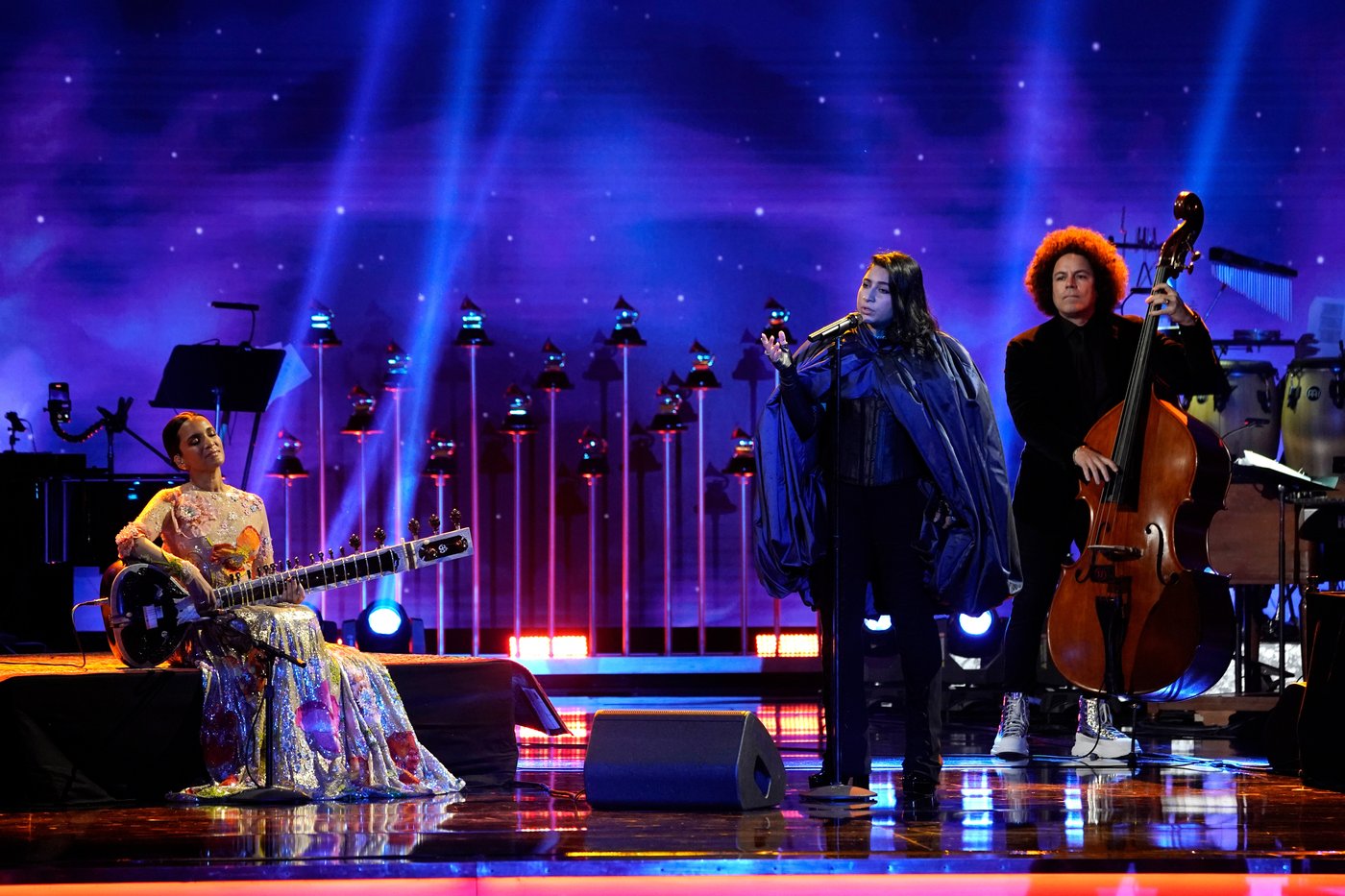
Arooj Aftab made history as the first Pakistani artist to win a Grammy when she received the Best Global Music Performance award for her song “Mohabbat” in 2022. This milestone marked a significant moment for South Asian representation on the global stage.
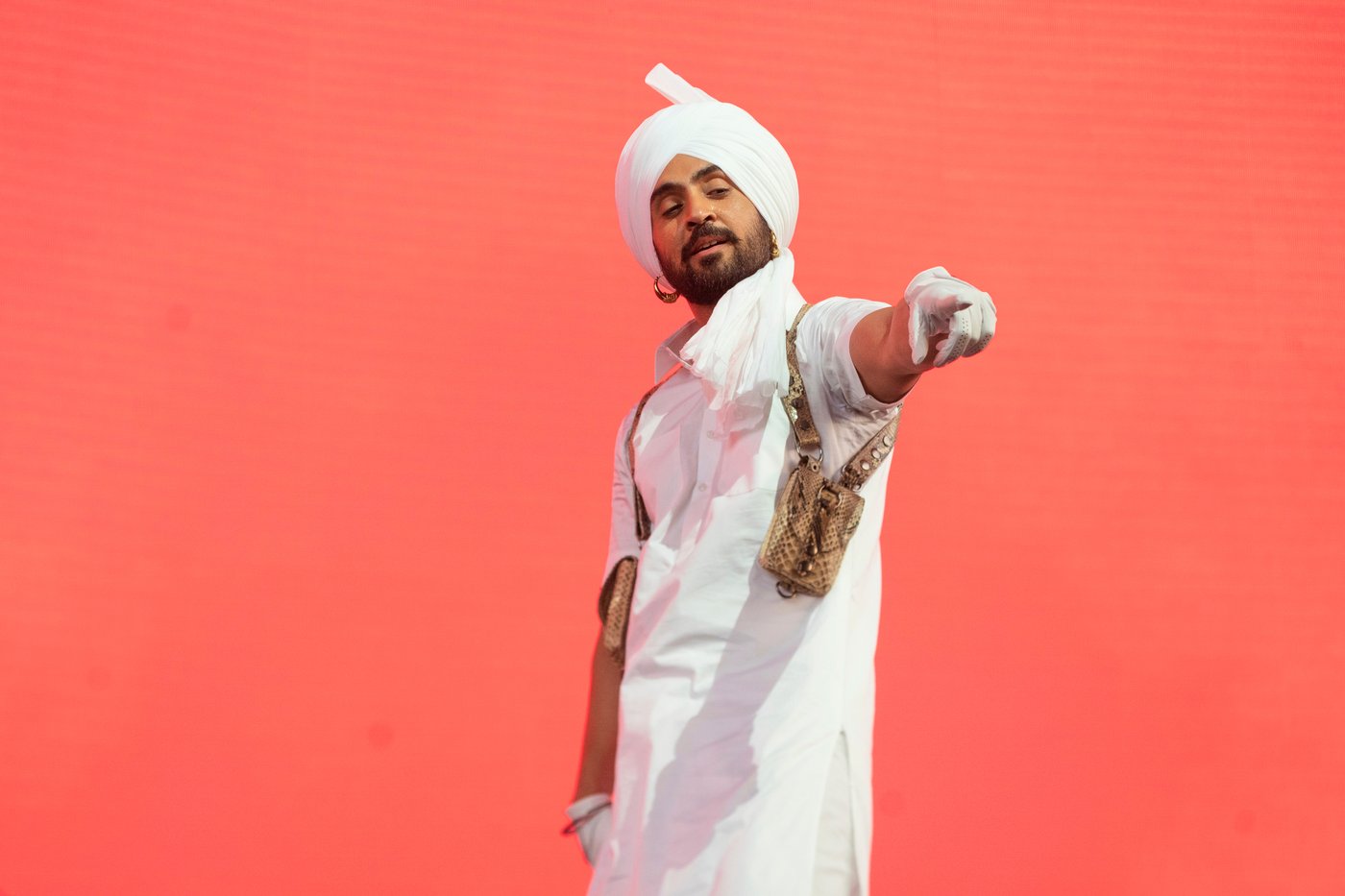
A year later, actor and singer Diljit Dosanjh took the stage at the Coachella Valley Music and Arts Festival in Southern California, becoming the first artist from Punjab—a region near the Pakistan border known for its rich musical traditions—to perform at the event. His performance highlighted the growing influence of South Asian artists in international music scenes.
In August, the Indian American artist Avara made her debut on the concert stage, performing in a bed of rose petals at a Brooklyn venue. Her first tour attracted a large audience, with fans eager to see the artist who has seen a massive surge in Spotify listeners—gaining over 250,000 new monthly listeners since November 2024, a more than 250% increase.
Audience member Alex Kim, a 22-year-old music assistant, shared his experience: “I started getting a bunch of her TikToks. Everyone has a short attention span these days, but I was like, ‘Wait a minute, I actually really like this.’”
As Afrobeat, K-pop, and Latin music continue to dominate global trends, songs with South Asian influences are now gaining widespread popularity. In April, Warner Music Group launched 5 Junction Records, a label focused on promoting South Asian-influenced artists to North American audiences.
Billboard CEO Mike Van described the trend as something that has been developing slowly over time. “We started to see these growth spurts over the last couple of years because of all the technology, evolving tastes, and activation of these diaspora audiences.”
Mixing genres
Jürgen Grebner, general manager of 5 Junction Records, explained that the label looks for artists with strong fan bases in their home countries. He noted that a No. 1 song in India can automatically chart in the Top 20 on Spotify’s global charts.
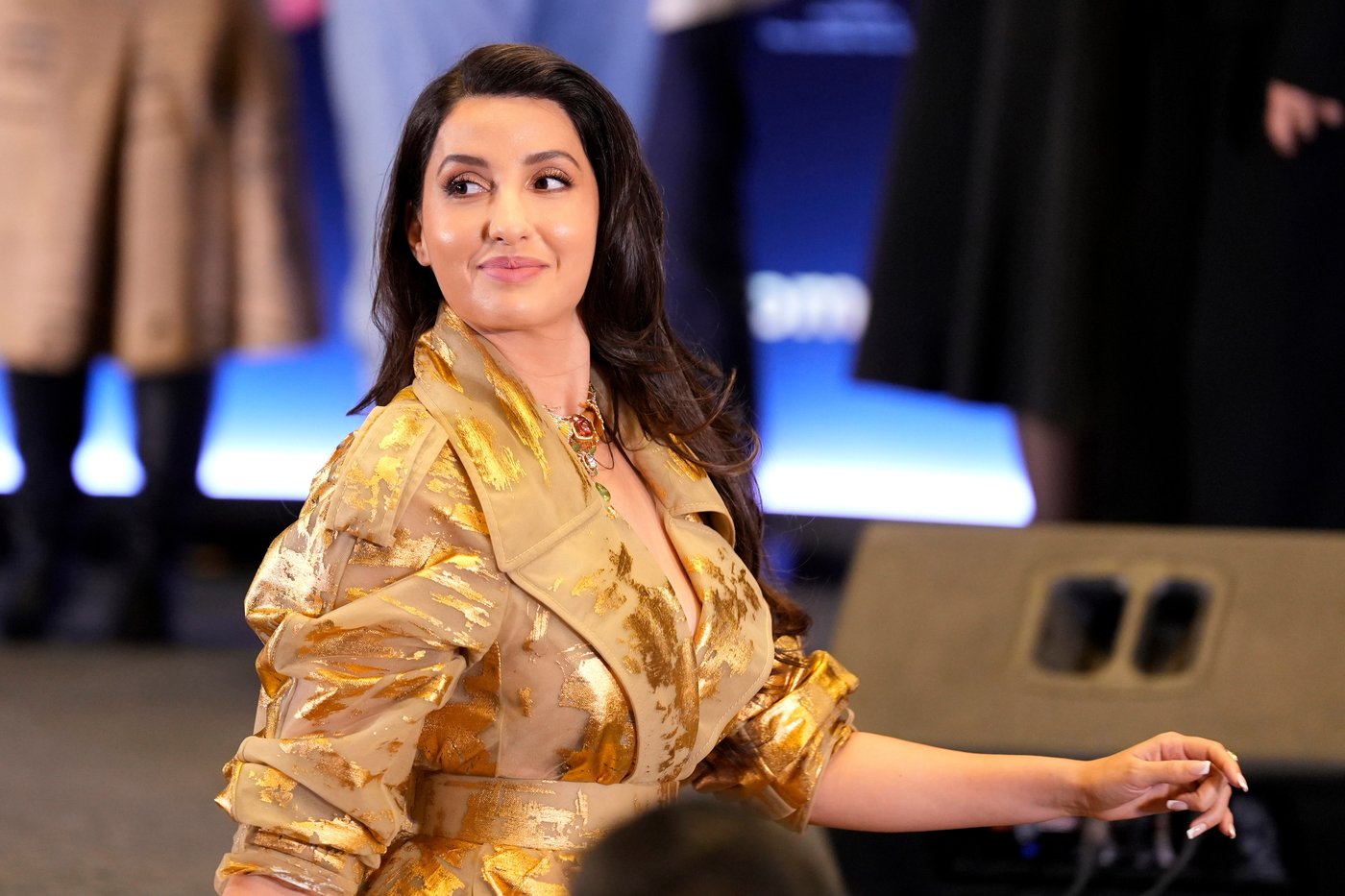
Nora Fatehi, a Toronto-born artist of Moroccan descent, became a Bollywood star after being encouraged by a Toronto talent agency to explore opportunities in India. Eleven years ago, she moved there, learned Hindi, and began auditioning for every modeling and acting role she could find, determined to make a name for herself.
“The Indian audience is the reason why I am what I am today. So while I’m making myself into a global artist, I’m bringing them with me,” Fatehi said.
Grebner emphasized the importance of collaboration for artists looking to expand beyond their home markets. “The only way really to win in those markets is to collaborate,” he said.
The international girl group Katseye features members of Indian, Japanese, and Filipino descent and recently appeared in a Gap ad. Fatehi’s single “Snake,” featuring U.S. pop and R&B singer Jason Derulo, reached the top 20 on Spotify charts in both the U.K. and Canada.
Embracing crossover
Professor Francesca Cassio, chair of the music department at Hofstra University, explained that some music from South Asian countries evolved as a way to teach spiritual teachings such as Buddhism, Hinduism, and Sikhism. One North Indian classical genre, khyal, gained popularity in the West during the 1960s due to the influence of sitar master Ravi Shankar on musicians like the Beatles and John Coltrane.
Van noted that as the U.S. becomes increasingly diverse, younger audiences are showing an “overall acceptance of global sounds.” Gen Z and Gen Alpha are leading the charge in embracing music that crosses cultural lines.
“Artists have a direct connection now to their fans,” Van said. “You’ve got clips now, literally edited down to 10 seconds or less, that are capturing people’s attention that can go viral. And so it’s a new way of not only promotion, but also again, consumption and discovery.”
“A ‘third culture kid’”
Avara, a 25-year-old artist, gained a social media following by posting videos that blend her meditative R&B and soul music with elements of her Indian classical and Western vocal training.
Growing up in Marietta, Georgia, Avara felt caught between two worlds. “I was around a lot of white people and people that didn’t look like me and I rejected a lot of parts of myself,” she said.
Her debut album, “a softer place to land,” honored the artistic community that shaped her over the past two years. Her next project, “MARA,” is about reclaiming her identity as a “young brown girl” through the lens of a “third culture kid”—someone who grows up balancing their parents’ heritage with the cultures they’re raised in.
She described her next album as a mixture of every culture that has influenced her over the past 25 years, blending Indian vocal riffs with Spanish guitar, reggae, and other styles.
“I’m trying to create something completely different,” she said. “I’m trying to create a new genre with this stuff that comes from those influences of what I learned as a kid.”