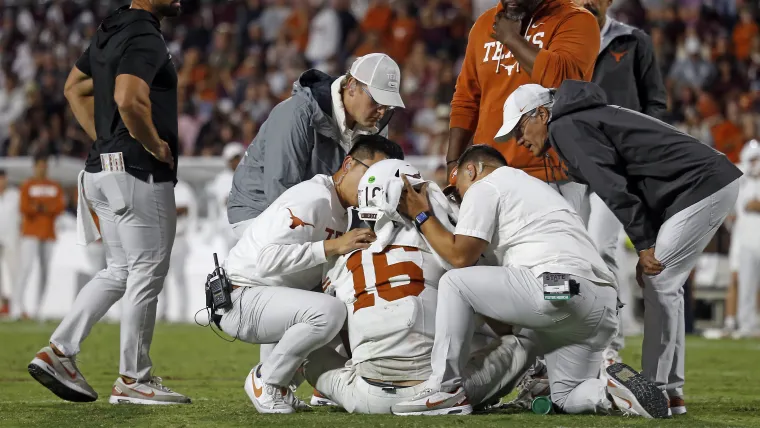
What is College Football Concussion Protocol?
Concussion protocol refers to a structured process that must be followed if an athlete is suspected of sustaining a head injury. It involves a series of evaluations and gradual steps to ensure the athlete can safely return to play. This protocol is essential in college football, where players are at risk of sustaining concussions due to the physical nature of the sport.
The protocol includes baseline testing, symptom evaluation, cognitive assessments, and balance checks. These tests help medical staff identify any changes that might indicate a concussion. If a player shows symptoms such as confusion, loss of consciousness, or poor balance, they are immediately removed from play and evaluated further.
How Long Is NCAA Concussion Protocol?
The NCAA concussion protocol consists of six stages, each requiring symptom resolution before progressing to the next. Each stage typically takes at least 24 hours to complete. The stages are as follows:
- Symptom-limited daily activities – The athlete performs non-strenuous tasks and is re-evaluated for any worsening symptoms.
- Light aerobic exercise – The athlete engages in light exercises like walking, with another evaluation to check for setbacks.
- Sport-specific exercise – The athlete participates in non-contact drills specific to their sport.
- Non-contact practice – The athlete joins full non-contact practices, avoiding any head impacts.
- Full-contact practice – The athlete returns to regular practice with full contact, provided there are no issues.
- Unrestricted return to play – The athlete is cleared to play without restrictions, assuming no symptoms arise during the process.
How Does NCAA Concussion Protocol Work?
Every college athlete undergoes baseline testing at the start of the season. This includes cognitive testing, balance assessments, and symptom evaluations. These results are used to compare against any changes that may occur during the season if a concussion is suspected.
When a potential concussion occurs, trained medical personnel evaluate the athlete. If a concussion is diagnosed, the athlete enters the protocol and receives post-concussion management, which includes initial care, ongoing testing, and re-evaluation.
College Football Concussion Protocol Timeline
The timeline outlines the steps athletes must follow to return to play after a concussion. Each step is designed to gradually reintroduce the athlete to physical activity while ensuring safety. The stages are carefully monitored to prevent any setbacks and ensure the athlete is fully recovered before returning to action.
Why Did the NCAA Create the Concussion Protocol?
The NCAA created the concussion protocol to raise awareness about head injuries and establish a standardized system for all programs. This ensures that student-athletes receive consistent care and treatment when dealing with concussions. The protocol helps protect players' health and long-term well-being, especially given the age range of college athletes (typically 18 to 24 years old).
College Football Concussion Statistics
Concussion data can be challenging to interpret because many athletes do not report their symptoms. However, studies suggest that concussions occur approximately 3.74 times per 1,000 athlete exposures during games. An athlete exposure is defined as one player participating in one game.
Kickoffs have been linked to a higher concussion rate, with 4.60 concussions per 1,000 athlete exposures. In a single day, with around 68 FBS games played, this could result in roughly 24 concussions.
History of NCAA Concussion Protocol Changes
The NCAA has made several changes over the years to improve player safety. Some key milestones include:
- 1939: All football players are required to wear helmets.
- 1973: Mouth protectors become mandatory for all players.
- 2010: The NCAA forms a concussion working group and adopts legislation requiring concussion management plans.
- 2012: The kickoff location is moved to the 35-yard line to reduce high-impact collisions.
- 2014: A three-year, $30 million study on concussions is launched.
- 2015: Player tracking devices are introduced for health and safety purposes.
- 2018: Fair catches inside the 25-yard line are allowed to promote safety.
How College Football Concussion Protocol Compares to NFL
While both the NCAA and NFL have similar concussion protocols, there are some differences. The NCAA sets general guidelines, but individual schools handle the implementation, leading to variations across programs. The NFL, on the other hand, has a more centralized approach.
The NFL protocol has five stages, while the NCAA has six. However, the overall process is similar, with both emphasizing gradual return to play and careful monitoring of symptoms. The main difference lies in how each organization enforces its policies.