Alberta Teachers’ Association Vows to Challenge Back to School Act
The Alberta Teachers’ Association (ATA) has announced its determination to challenge the provincial government’s Back to School Act through all available legal means. The legislation, passed using procedural shortcuts, forced 51,000 teachers back to work on Wednesday and imposed a new four-year contract that 90 per cent of teachers had already rejected.
The Back to School Act makes use of the notwithstanding clause, which allows the government to bypass certain rights protected under the Canadian Charter of Rights and Freedoms. This provision prevents the ATA from bargaining or striking until September 2028 and blocks courts from overturning the law in the event of a successful Charter challenge.
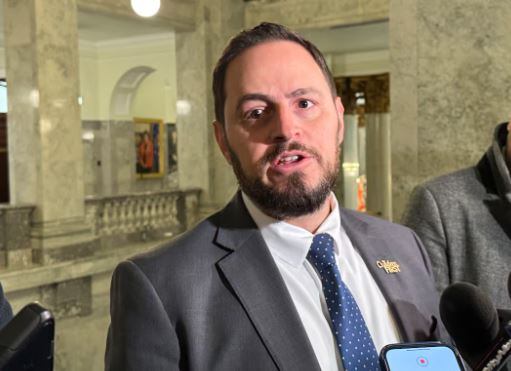
“Teachers will comply with the law, but make no mistake, compliance is not consent,” said Jason Schilling, president of the ATA, at a press conference in Edmonton. “The association will fight this abuse of power with every tool the law provides, and every ounce of conviction we possess.”
Schilling mentioned that a legal team is currently assessing the ATA’s options to challenge the legislation. The act grants the government permission to breach rights articulated in the Canadian Charter of Rights and Freedoms, the Alberta Bill of Rights, and the Alberta Human Rights Act. The ATA’s goal is to overturn the use of the notwithstanding clause, either by legal means or public pressure.
Condemnation from Human Rights Organizations
Human rights organizations have also condemned the Alberta government for undermining teachers' right to collective bargaining. Amnesty International Canada stated that the government is violating teachers’ right to strike, their freedom of expression, freedom of association, and right to peaceful assembly.
Ketty Nivyabandi, secretary general of Amnesty International Canada’s English-speaking section, said: “Alberta’s use of the notwithstanding clause continues an alarming trend of provincial governments putting political expediency ahead of people’s human rights.”
The Canadian Civil Liberties Association called the legislation a dangerous abuse of power. Executive director Howard Sapers said: “If Alberta can use the notwithstanding clause now without consequence, it will not hesitate to do so again — and so will other governments.”
Labour organizations, including the Alberta Union of Provincial Employees, the Canadian Labour Congress, and Unifor, have also criticized the legislation, stating it puts all workers’ rights at risk.
A Turning Point for Unionized Workers
In an interview, Athabasca University professor Jason Foster described the legislation as a turning point for unionized workers. He said: “What they are signaling in this bill today is that fair and free collective bargaining for the public sector in Alberta is dead, because they will just do whatever they want to do regardless.”
NDP Leader Naheed Nenshi has pledged to introduce legislation to limit the provincial government’s use of the notwithstanding clause if his party forms government in the future.
Promises of School Improvements
Government ministers defended the actions as necessary to return children to class after teachers walked off the job on October 6, shutting down schools. Finance Minister Nate Horner said: “At some point, teachers’ rights to strike bleed in and prevent kids’ right to an education, and it's up to the government to balance those rights.”
Ministers justified the use of the notwithstanding clause by pointing to the unique way teachers bargain with their employers. Issues such as pay are bargained at a central table, while questions about time for professional development and bursaries are negotiated at 61 different tables with individual school boards. The clause prevents teachers from negotiating at both levels until 2028.
Education Minister Demetrios Nicolaides pledged to spend $100 million more per year over the next three years to hire 1,500 more educational assistants (EAs) and speed up testing for students with possible deficits. The government also promised to pay for 3,000 more teaching positions by 2028, although the province’s education funding formula would already entitle growing school boards to increased funding for staff.
“These are immediate changes that our schools will see,” Nicolaides said. “They'll see more teachers coming into the classroom over the next few months. They'll see more teachers and EAs. That'll help decrease class sizes and provide students with tailored support that they need to succeed.”
Nicolaides also announced the creation of an education task force to address concerns about large class sizes and students with complex needs. He promised to restore the collection of class size and complexity data from school divisions, six years after his UCP government ordered school boards to stop collecting and reporting that data.
Criticism of Government Pledges
NDP education critic Amanda Chapman called the minister’s pledges for extra staff “completely unbelievable” and said they were “a drop in the bucket.” She added: “There are schools that need to add five or six EAs to deal with the complexity in their classrooms — minimum.”
The ATA has also criticized the government’s pledges, stating they are inadequate to compensate for years of underfunding in public education. The Opposition has questioned how Alberta will attract and retain teachers while their right to bargain is suspended by the Back to School Act.